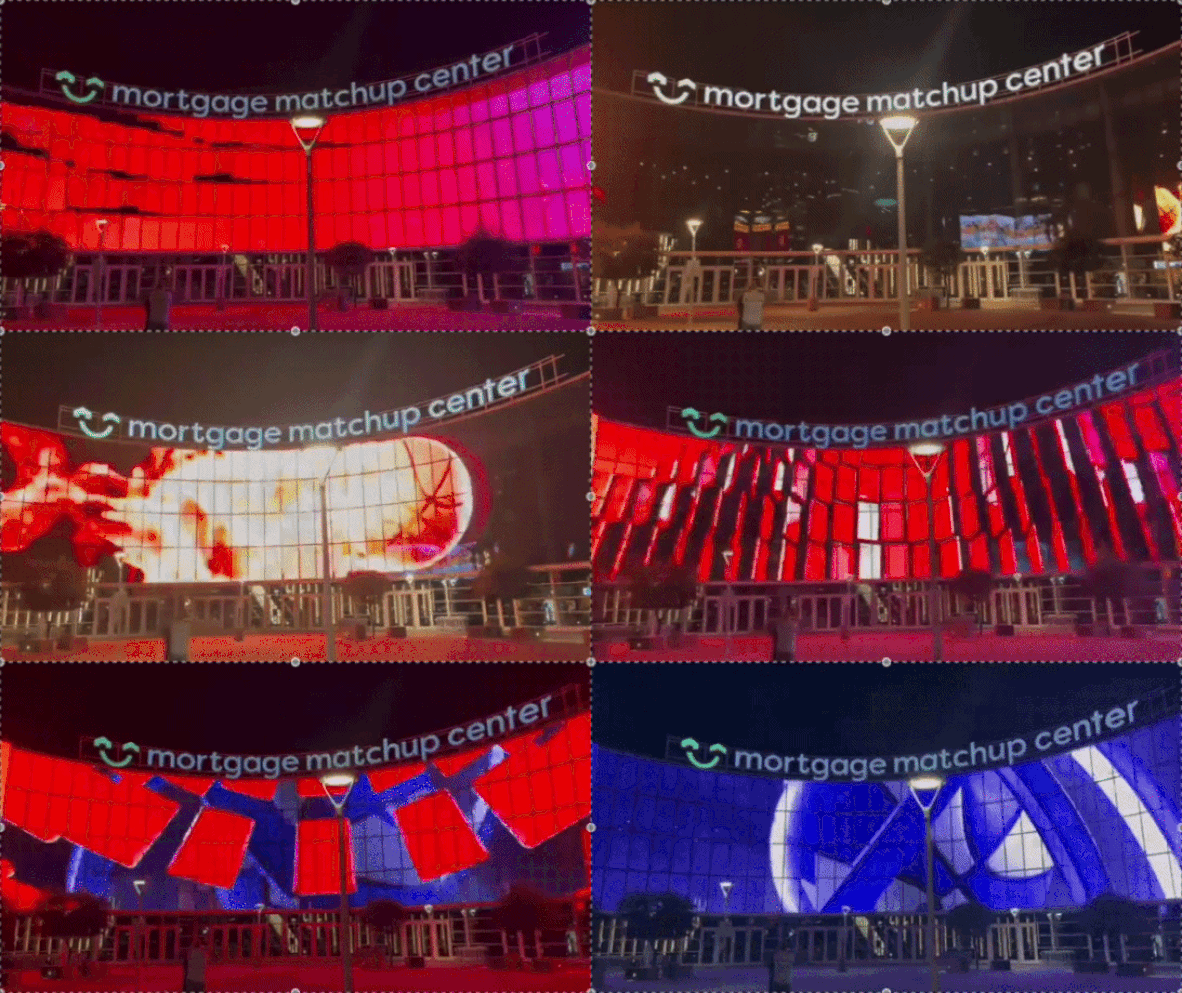
Digital signage has been used in installations across all verticals, from menus to messaging systems to wayfinding kiosks. However, nothing remains the same in Pro AV, and much like everything else, the role of digital signage is evolving.
"Displays are definitely more than a sign," said Joe Drury, business manager of Sony's BRAVIA Professional Displays. "We’re in an era where digital signage goes beyond sharing simple, basic information to become a dynamic and interactive canvas for two-way, real-time messaging and impactful visuals."
You Tell Me That It's Evolution
Are we entering a digital signage renaissance? As Drury explained, new forms and iterations are addressing the market’s demands. "Digital signage is truly a canvas to convey information, thoughts, feelings, activations, and messages," he added. "It is only as necessary and engaging as the content being shared consistently, so ensuring the best media and message are being conveyed is key to its continued evolution."
If it isn't losing its place in the Pro AV world, then why change? According to Frank Boston, founder of MoodyCanvas.com, digital signage still holds enormous potential, but it does require fresh thinking and creative vision to truly stand out.

"The marketplace is certainly crowded, but the real challenge is that most players are doing the same basic things," he said. "Too often, the focus is on purchasing the screens, while the content becomes an afterthought or a budget drain, yet even the most impressive display will fall flat if the visuals aren’t compelling. This is why it’s important for integrators to propose content as part of the complete solution."
Digital signage on many displays once showcased flashy, bright messaging or maps or even food items. Now, many are now turning to art.
"The concept of a ‘digital canvas’ is integral to approaches when designing solutions," explained Dana Corey, SVP and global GM, Avocor. "Modern displays have evolved beyond simple endpoints, now functioning as dynamic platforms for collaboration and delivering immersive experiences. This transformation illustrates a broader shift toward technology that is expressive and adaptable to its intended environment."
Audience Engagement
Key among the content on these digital canvases is leveraging emotional engagement while reinforcing brand identity and supporting interactive applications. So, what are those new opportunities? How can businesses capitalize on the art of digital signage?
The simple answer: Understand your audience to get viewers engaged.
"Engagement deepens and becomes more impactful when it provides the exact information an audience is seeking and can even take it one step further," Drury said. "As displays and their offerings become more intelligent, end users benefit from increasingly tailored insights and AI capabilities more quickly and efficiently and with more intent than before."
"Digital signage is now a dynamic engagement tool that can transform a space and the way people interact with it," Corey agreed. "In hotels, airports, and retail environments, we see many ways customers can leverage signage to captivate audiences beyond traditional menu boards and wayfinding."
“The challenge isn’t saturation, it’s differentiation. And that’s where innovation in hardware, software, and user experience is making all the difference.”
Dana Corey, Avocor
So, what are some of those ways that are currently being used? Corey gave examples of how Avocor enables immersive storytelling on large-format, high-resolution displays to create the mood and atmosphere the moment a guest enters a space. In hotels, for example, Avocor can transform a lobby wall into a digital canvas with sensor integration and smart content management, enabling creatively designed signage to adapt to the audience in real time. He also recommended inviting customers to participate with interactive engagement points.
Mitch Braff, founder and CEO of LiquidView, the virtual window company, turned to Sony's BRAVIA displays to design his new virtual windows. Using the BZ40L series, which features Deep Black Non-Glare technology, Braff immerses viewers by converting a closed-in space like a conference room into a serene atmosphere, all of their own choosing.
Jill Moses, founder and CEO of The Inspired Community Project, a nonprofit research organization in the Bronx, NY, that builds a more equitable, inclusive, and accessible system of care for neurodivergent children, turned to LiquidView to transform therapy spaces into both calming and engaging environments that "promote emotional regulation and reduce sensory overload for the children we serve," she explained. "Our kids may not have access to safe, scenic spaces outside of our center, so this visual connection to the natural world is more than just aesthetic—it’s therapeutic."
For MoodyCanvas.com, no situation is the same. Every piece of content is designed with the specific environment in mind. Whether it is a massive lobby to a high-traffic bar/restaurant, or conversely a slower foot traffic location like waiting rooms and lounges, his team's content is ideal for captivating audiences and enhancing the overall experience. "Digital signage should be part of the interior design, not just an add-on, and architects should have a voice in content selection because it directly shapes the mood and energy of the environment," Boston said.
The Next Big Thing
According to Drury, the next big opportunity to elevate brand awareness using digital signage is directly related to engagement. "Understanding what your target audience would find valuable and providing relevant content via the best visual impact and reliable hardware is key to elevating brand awareness," he said.
To get to this next level of digital signage, it will take a blending of, well, quite a few things to come together. Corey said the new era of digital signage is an intelligent fusion of hardware innovation and software integration. While display quality is of obvious importance, so is versatility like supporting touch, pen, and gesture inputs, as well as seamless integration with content management systems and collaboration platforms.
That could be costly, but that's why Boston created MoodyCanvas.com. "[We are] dedicated to producing high-quality digital signage content crafted with Adobe After Effects and generative AI," he explained. "This approach allows us to offer a ready-made, affordable content library that still delivers strong visual impact while being accessible to a much wider audience." In short, Boston has simplified licensing to make art both affordable and easy to use.
Innovations such as spatial audio, holographic and 3D visualization, and interactivity transform signage from a passive display into a two-way engagement tool. "The next generation of digital signage is about blending advanced display technology with complementary innovations to create fully immersive environments," Corey said. "By integrating these technologies with Avocor’s high-performance displays, customers can deliver experiences that are not only visually striking but also multisensory, adaptive, and memorable," Corey said. "The goal is to create signage that’s not just seen but felt and experienced."
"The next generation of technology is always redefining itself," opined Drury. "Sony has implemented forward-looking innovations that help create and drive impact and purpose. Our Deep Black Non-Glare treatment is just one example of this commitment to unforgettable and purpose-driven visual experiences. This coating, which is featured on our flagship BZ40L pro BRAVIA displays, offers minimal glare with maximum contrast, perfect for bright and challenging lighting conditions."
In other words: The next generation of digital signage is art. People no longer want to simply see the message, they want to feel it. "In a crowded marketplace, impact comes from relevance and engagement, and today’s signage is becoming context-aware and deeply integrated into broader digital ecosystems," concluded Corey. "The challenge isn’t saturation, it’s differentiation. And that’s where innovation in hardware, software, and user experience is making all the difference."
Get even more insights: Download SCN's Integration Guide to Digital Signage.