Sponsored by

LCD vs. dvLED Video Walls: Choosing the Right Technology for High Impact Spaces

Learn why dvLED has become the preferred video wall technology for high-impact, modern spaces. We outline the pros and cons so you can make an informed purchasing decision.
Remember five or even 10 years ago, when video walls started appearing at airports, in the lobbies of big corporate office buildings, in retail spaces of all sizes, and in common areas of the university campus? There might have been a grid of bezels interrupting the image's flow, but the overall impact was exciting and nearly immersive. We owe a lot to these early LCD video walls. They whet our appetite for impactful visuals on a large scale.
Fast-forward, and direct-view LED (dvLED) has become the preferred video wall technology for high-impact, modern spaces. From a purely visual perspective, they deliver a seamless, immersive image on a grand scale, limited only by the space for the installation or imagination.
The LCD Video Wall
LCD technology is an appropriate choice when the upfront cost of the panel is the most important concern. LCD panels are often a desirable choice when a lower-cost single panel is needed in spaces where ambient light can be controlled, and sharp visuals are needed. Weighing the overall pros and cons and total cost of ownership can help you make a more informed decision when designing a video wall.
When used together to create a video wall, LCD displays pose the following challenges:
>> LCD panels can be heavy and require multi-panel mounting, making the installation complex, adding time and money to the overall installation process.
>> When multiple LCD panels form a video wall, the same color can appear slightly different on some of the screens, making it difficult to achieve a uniform image.
>> LCD panels age at different rates. If one panel fails, the replacement will rarely match the existing panels in the wall.
>> Even the thinnest bezel around an LCD panel disrupts visual continuity.
>> LCD panels have approximately 60-75 percent of the life expectancy of dvLED.
LCD vs. dvLED Comparison Snapshot

dvLED Delivers High-Impact, Plus
In recent years, the cost of dvLED video wall technologies has decreased, making them a more attractive investment for organizations looking to make an impact in modern spaces. Combine a seamless look, easy installation and maintenance, and the lifespan of dvLEDs is rated at up to 100,000 hours—often exceeding the system's expected operational life.
Today, we expect a seamless, dynamic, and immersive experience. This can only be achieved with dvLED panels that lock together without visible borders, creating a continuous canvas without distracting grid lines. A sleek, modern surface elevates the viewer's experience. From lobby signage to control rooms, to retail and education environments, dvLED video walls deliver a premium look that LCD can't match.
Most dvLED systems feature an ultra-slim chassis with minimal framing. Compared to bulky LCD stacks, dvLED are lighter and are better suited for modern architecture.
Lightweight tiles allow for fast setup. ViewSonic’s All-in-One Direct View LED displays include everything needed for a complete video wall—cabinets, LED tiles, power supplies, video processing, cabling, and mounting—an all-in-one package. This simplifies purchasing, setup, and deployment for faster, easier integration. Front-service access allows for quick repairs. Panels are factory-calibrated for color consistency and are easier to replace individually, simplifying maintenance. The system configures automatically, so there's no need to calibrate multiple panels manually.
dvLED Case-in-Point
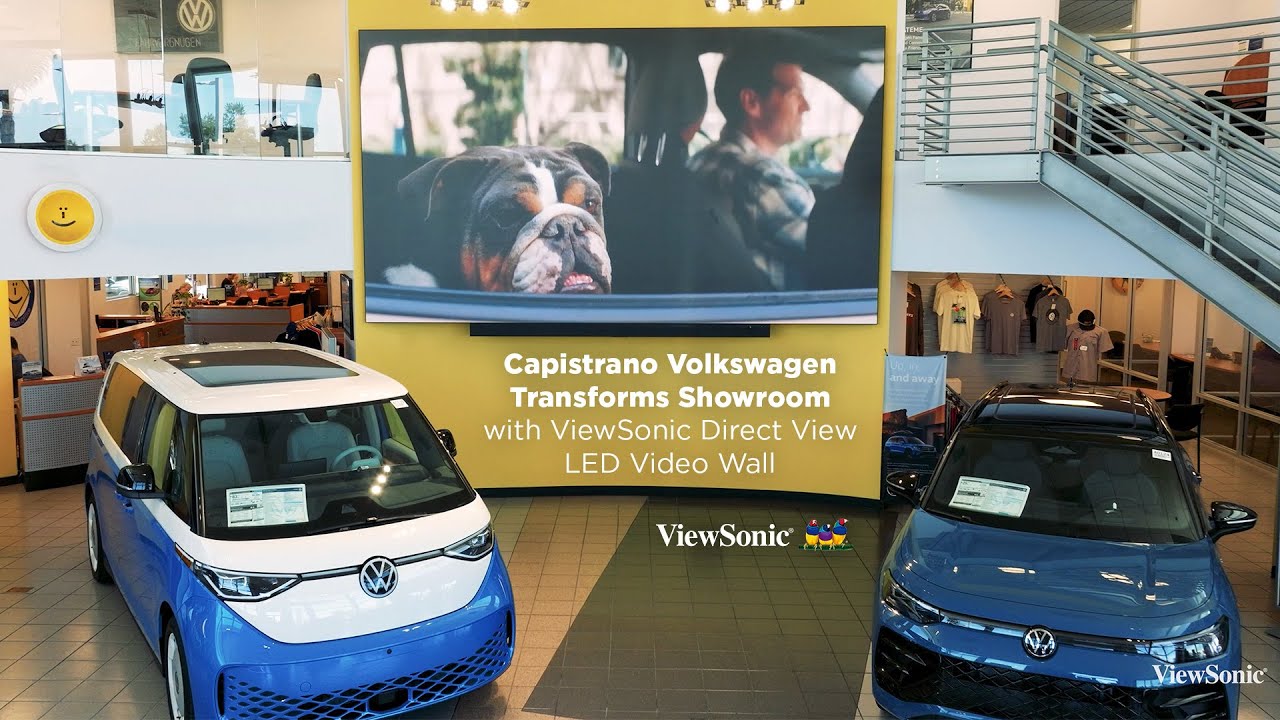
Check out the video to see how Capistrano Volkswagen in California transformed its showroom with a vibrant 231-inch ViewSonic Direct View LED display. With seamless bright visuals, simple content management, and 24/7 reliability, this upgrade enhances customer experiences, boosts engagement, and shines bright even from the nearby freeway. The dealership credits the new video wall for attracting new customers to the showroom.
Bottom Line
If you are designing a high-impact space, whether it's a meeting room, a lobby, or a control center, dvLED offers a superior experience. It brings natural advantages that maximize your investment, including seamless zero-bezel designs, superior brightness for well-lit rooms, and wide viewing angles that ensure everyone sees clearly.
While LCD video walls and projectors are common due to lower initial costs, dvLED is often a better choice for the long term. With easier front-service maintenance and greater reliability, dvLED delivers a better total cost of ownership. For an environment where design, longevity, and performance matter, dvLED is the clear winner.
Check out ViewSonic’s complete All-in-One Direct View LED portfolio here.